PLANNING KNOWLEDGE
Destination Wedding Vendors in Italy: Who to Book and When
Destination wedding vendors in Italy — Planning a destination wedding in Italy is nothing short of magical. With its stunning ...

Wedding Planning Guide
Destination Wedding Vendors in Italy
Who to Book, When to Book Them and Why the Right Team Matters
Planning a destination wedding in Italy is a beautiful experience.
The landscapes, villas, food, architecture and atmosphere can create a celebration that feels unforgettable.
But behind every effortless Italian wedding, there is a carefully chosen vendor team.
Venue, catering, photography, video, florals, music, beauty, celebrant, transport and planning all need to work together.
For couples planning from abroad, choosing the right destination wedding vendors in Italy is one of the most important parts of the process.
The right vendors do not simply provide services.
They protect the experience.
Why Vendor Selection Matters So Much in Italy
A destination wedding in Italy is different from a local wedding at home.
You may be working across time zones, languages, regional customs, Italian contracts, venue restrictions, VAT, music licenses, transport challenges and different expectations around service.
This is why vendor selection should never be random.
Each supplier should be chosen for:
professional reliability;
experience with destination weddings;
clear communication;
transparent pricing;
knowledge of Italian venues and logistics;
ability to collaborate with the wider vendor team.
A beautiful wedding is not created by one supplier alone.
It is created by a team that understands the same vision and knows how to execute it properly.
1. Wedding Planner in Italy
The First Vendor You Should Usually Book
Before booking the venue, caterer or photographer, most international couples should start with a wedding planner in Italy.
A planner helps you understand what is realistic before major decisions are made.
This is especially important if you are planning from the United States, the United Kingdom or another country and cannot visit every venue or supplier in person.
A destination wedding planner can help with:
vendor recommendations;
timeline management;
legal wedding guidance where needed;
coordination with all vendors before and during the wedding.
Hiring a planner early can save time, reduce mistakes and help you avoid venues or vendors that do not truly fit your wedding.
When to book: ideally 18–24 months before the wedding, or as soon as you begin planning.
2. Wedding Venue in Italy
The Foundation of the Entire Celebration
The wedding venue sets the stage for everything.
It determines the date, atmosphere, guest capacity, accommodation, catering options, ceremony possibilities, music rules, rain plan and overall budget.
Popular destination wedding locations in Italy include:
Tuscany, for villas, vineyards and countryside estates;
Lake Como, for lakeside glamour and historic villas;
the Amalfi Coast, for sea views and cinematic terraces;
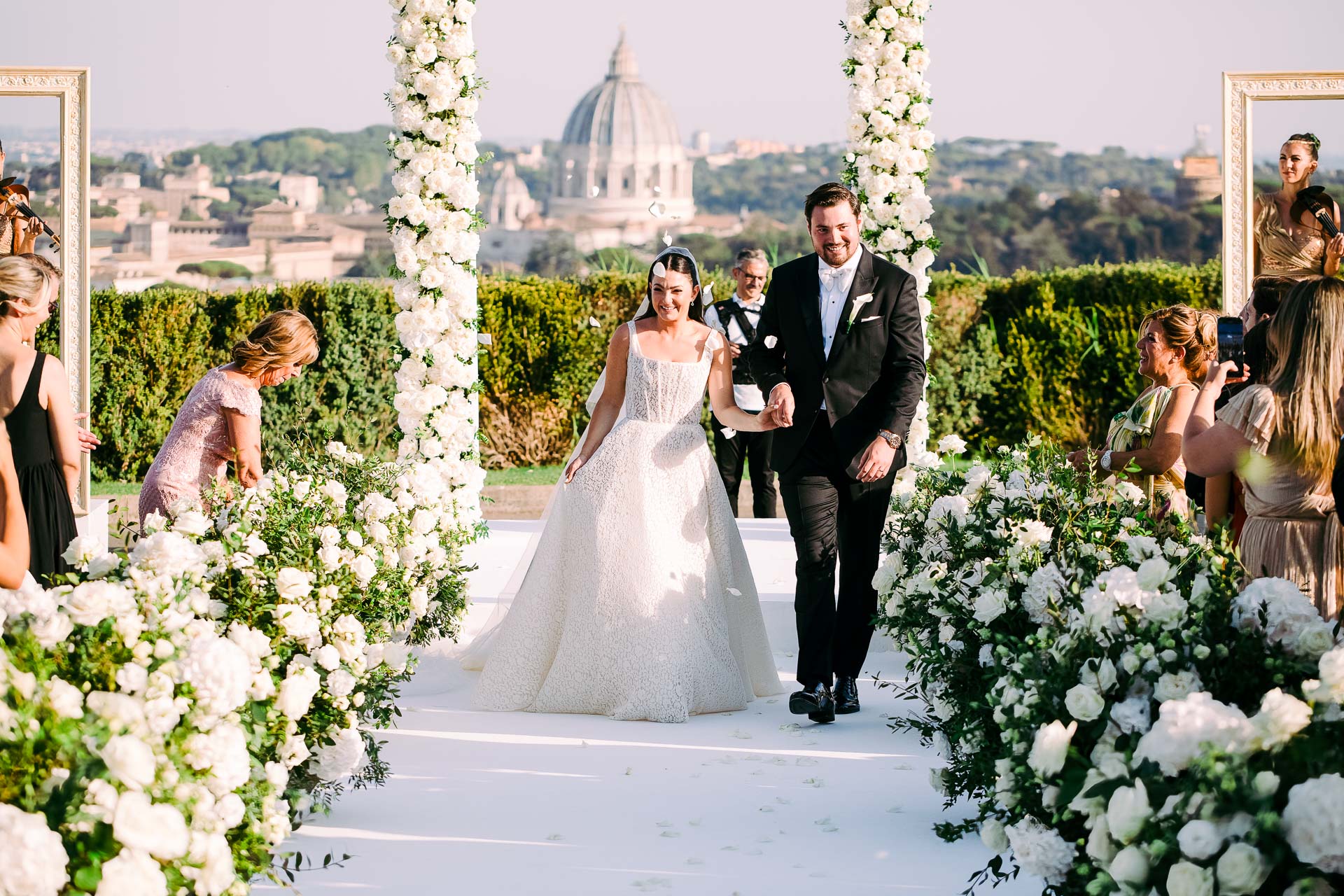
Rome, for palaces, churches and black-tie city elegance;
Venice, for intimate luxury and atmosphere;
Umbria and Puglia, for slower, character-rich celebrations.
Before booking a venue, look beyond the photos.
How many guests can it host comfortably?
Is accommodation available on-site?
Is catering internal, exclusive or flexible?
Is there a strong Plan B for rain?
Can music continue indoors after outdoor curfew?
Can guests arrive by bus or private transfer?
Is a legal civil ceremony possible on-site?
Are there mandatory vendors or extra supplier fees?
The best venue is not always the most famous one.
It is the one that fits your guest count, budget, logistics and atmosphere.
When to book: ideally 18–24 months before the wedding, especially for May, June, September and early October.
3. Wedding Caterer in Italy
The Heart of the Guest Experience
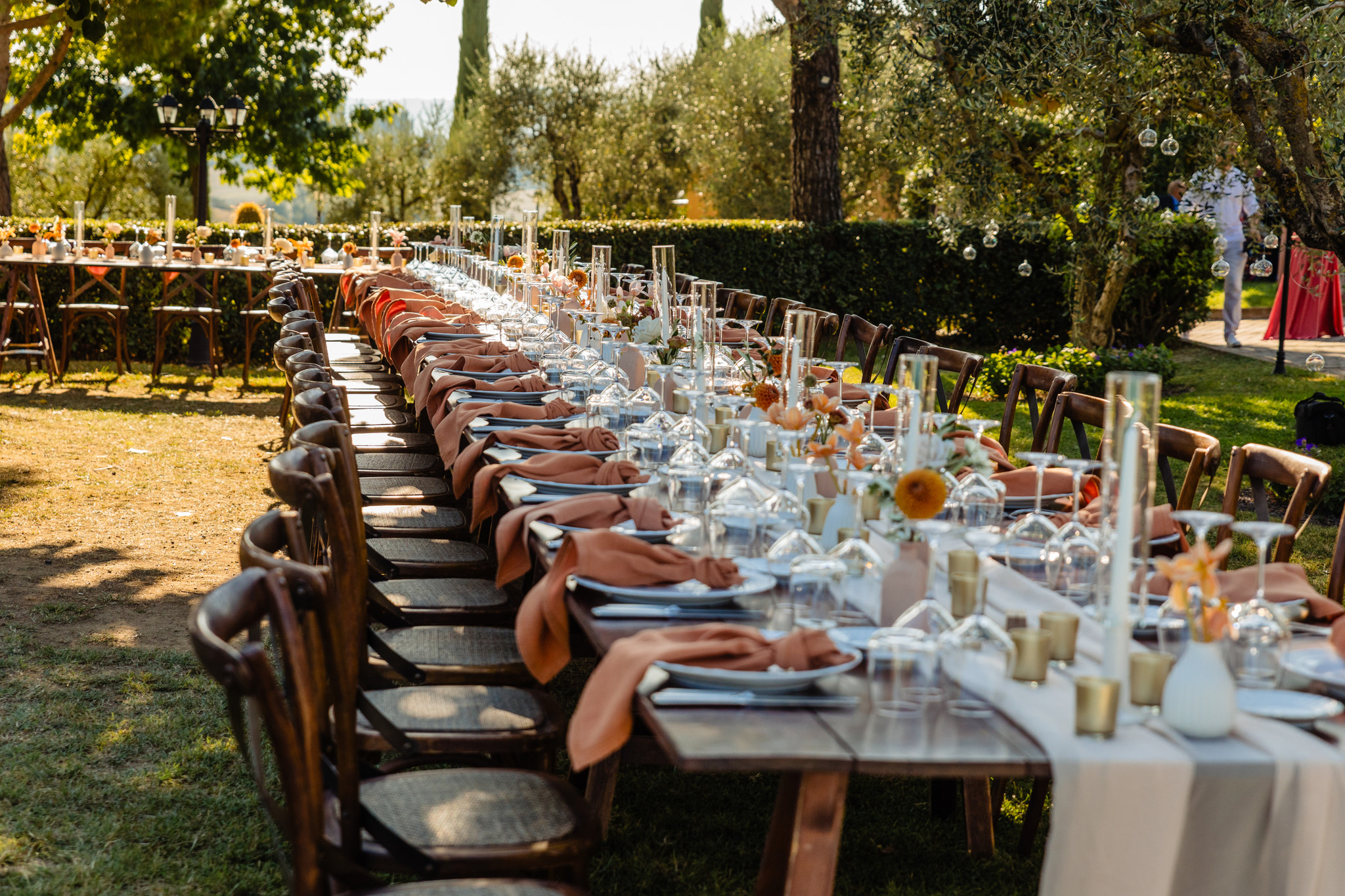
Food is one of the most memorable parts of a wedding in Italy.
Guests often remember the aperitivo, the pasta, the wine, the service and the atmosphere around the table as much as the ceremony itself.
If your venue does not provide internal catering, the caterer should be booked shortly after the venue.
A wedding caterer in Italy may provide:
wedding cake service;
tableware and glassware;
kitchen setup and service logistics.
Catering can also extend beyond the wedding day if you are planning a welcome dinner, pizza party, poolside lunch or farewell brunch.
Because catering affects both budget and guest experience, it should be chosen with care.
When to book: as soon as the venue is confirmed, especially if the venue requires external catering.
4. Photographer and Videographer
The Team That Preserves the Memory
Your wedding photographs and film are what remain after the celebration is over.
For a destination wedding in Italy, photography and videography should be booked early, especially if you want a specific style.
Look carefully at full galleries, not only Instagram highlights.
A strong photo and video team should understand:
Italian natural light;
villa and countryside logistics;
city weddings in Rome, Florence or Venice;
multi-day event coverage;
guest movement and timing;
your preferred style, whether editorial, documentary, fine-art or cinematic.
The best Italian wedding photographer or videographer is not simply the most expensive or the most popular.
It is the one whose work feels aligned with how you want to remember the day.
When to book: ideally 12–15 months before the wedding, earlier for high-demand dates.
5. Wedding Florist and Design Team
The Visual Language of the Wedding
Flowers and design bring personality, softness and atmosphere to the wedding.
In Italy, floral design should always respond to the venue.
A Tuscan villa, Lake Como garden, Amalfi terrace or Roman palace will each call for a different approach.
A wedding florist in Italy may create:
ceremony arch or grounded florals;
floral installations;
repurposed arrangements for ceremony and reception.
Flower costs depend on season, availability, scale, labor, transport and installation.
Even a simple-looking design can require significant work behind the scenes.
When to book: ideally 9–12 months before the wedding.
6. Music and Entertainment
The Energy of the Celebration
Music shapes the rhythm of the wedding day.
It can support the ceremony, create atmosphere during aperitivo, elevate dinner and launch the party.
Your music team may include:
saxophonist or percussionist;
sound and lighting technicians.
Before booking music, confirm the venue’s rules.
Some venues have outdoor music curfews, volume limits or mandatory technical suppliers.
You should also include the SIAE music license in the budget.
When to book: around 12 months before the wedding, earlier for live bands or peak-season weekends.
7. Hair and Makeup Team
Confidence, Comfort and Timing
Hair and makeup are often underestimated until the final months, but the best bridal beauty teams in Italy can book early.
Professional beauty support is important not only for the final look, but also for the wedding morning timeline.
When choosing hair and makeup artists, confirm:
bridal hair and makeup pricing;
assistant costs for bridesmaids or family;
how many people can be prepared in the available time;
whether touch-up service is available;
experience with summer heat and outdoor weddings.
This is especially important for weddings in Tuscany, Rome, Lake Como and the Amalfi Coast during the warmer months.
When to book: ideally 9–12 months before the wedding.
8. Wedding Celebrant in Italy
The Voice of the Ceremony
The celebrant shapes the emotional structure of the ceremony.
For symbolic weddings, the celebrant can create a ceremony that reflects your story, values, tone and relationship.
For civil or legally recognized ceremonies, requirements depend on the Comune, location and type of ceremony.
A celebrant may help with:
bilingual ceremonies;
coordination with musicians and planner;
tone, pacing and emotional flow.
The ceremony should not feel generic.
It should feel personal, clear and meaningful.
When to book: ideally 6–9 months before the wedding.
9. Transportation Vendors
The Practical Detail Guests Remember When It Goes Wrong
Transport is not glamorous, but it is essential.
Many Italian wedding venues are located in countryside areas, hill towns, coastal villages or private estates where taxis are limited.
Guest transportation may be needed for:
airport arrivals, if hosted;
ceremony-to-reception transfers;
late-night return to hotels;
older guests or families with children;
venues with narrow roads or limited parking.
At the end of the night, guests should not be trying to find taxis alone in an unfamiliar area.
Good transportation planning protects comfort, safety and timing.
When to book: once accommodation locations and guest numbers are clearer, usually 4–8 months before the wedding.
10. Rentals, Lighting and Technical Suppliers
The Infrastructure Behind the Beauty
Some of the most important vendors are the least visible to guests.
Rentals, lighting and technical production can determine whether the wedding feels polished, functional and comfortable.
Depending on the venue, you may need:
tableware and glassware;
string lights or chandeliers;
architectural lighting;
marquee or tent for the rain plan.
These details affect atmosphere, photography, guest comfort and the practical success of the event.
They should be planned early enough to avoid last-minute compromises.
When to book: usually 4–8 months before the wedding, once the design and floor plan are defined.
Recommended Booking Order for Wedding Vendors in Italy
How to Choose the Right Italian Wedding Vendors
When choosing vendors, do not look only at price or Instagram presence.
complete galleries or past events;
reviews and testimonials;
communication style;
VAT and payment terms;
experience with your type of venue;
ability to work with an international couple;
willingness to collaborate with the planner and other suppliers.
The cheapest vendor is not always the best value.
The most expensive vendor is not automatically the best fit.
The right vendor is the one who can deliver your vision professionally, calmly and clearly.
Frequently Asked Questions
Which vendors do we need for a destination wedding in Italy?
Most couples need a planner, venue, caterer, photographer, videographer, florist, music team, hair and makeup, celebrant, transport and sometimes rentals, lighting and technical suppliers.
Who should we book first for a wedding in Italy?
Usually, book your wedding planner first, then your venue. The planner can help you choose a venue that fits your budget, guest count, logistics and style.
When should we book wedding vendors in Italy?
For popular dates and regions, begin 18–24 months before the wedding. Key vendors such as photographer, videographer, music and florist should usually be booked 9–15 months in advance.
Do Italian wedding venues include catering?
Sometimes. Some venues have internal catering, some require an exclusive caterer and others allow external catering. This should be confirmed before booking the venue.
Do we need a wedding planner to find vendors in Italy?
For most international couples, yes. A planner helps identify reliable vendors, manage communication, compare quotes, understand contracts and coordinate the entire team.
A destination wedding in Italy is only as strong as the team behind it.
The right vendors make the difference between a wedding that looks beautiful online and a wedding that feels calm, elegant and seamless in real life.
Start with the planner.
Choose the venue carefully.
Build the rest of the vendor team with intention.
When every supplier understands the vision and the logistics, the wedding can feel effortless — even when the work behind it is anything but.
Planning Your Destination Wedding in Italy?
Dolce Promessa helps international couples create refined destination weddings across Tuscany, Lake Como, the Amalfi Coast, Rome and private Italian estates — with trusted vendor curation, venue guidance, budget clarity, design direction and guest logistics.
Begin your wedding journey with us.
With care, Sofia Lead Planner & Experience Designer Dolce Promessa