PLANNING KNOWLEDGE
Hidden Wedding Costs Most Couples Forget to Budget For
Hidden wedding costs in Italy — You're deep into wedding planning, and you've probably already booked the essential vendors...
Wedding Budget Guide
Hidden Wedding Costs in Italy
What Couples Often Forget to Budget For
When couples start planning a destination wedding in Italy, the first budget conversations usually focus on the obvious categories.
But once the wedding becomes more detailed, smaller costs begin to appear.
These expenses are not always “hidden” on purpose. Often, they are simply forgotten, underestimated or not clearly explained at the beginning.
For couples planning from abroad, especially from the United States or the United Kingdom, these details can make a real difference to the final wedding budget.
Here are the hidden wedding costs in Italy that couples should plan for from the beginning.
1. SIAE Music License
If you are planning to have music at your wedding in Italy, you will usually need a SIAE license.
SIAE is the Italian music rights license required for events where copyrighted music is played publicly.
welcome dinners or additional events with music.
The cost depends on several factors, including the type of event, number of guests, whether there is dancing and whether the music is live or recorded.
This is a standard legal requirement in Italy, but many international couples forget to include it in the budget.
Your planner, venue or music supplier can usually guide you through the process.
2. Lighting and Technical Production
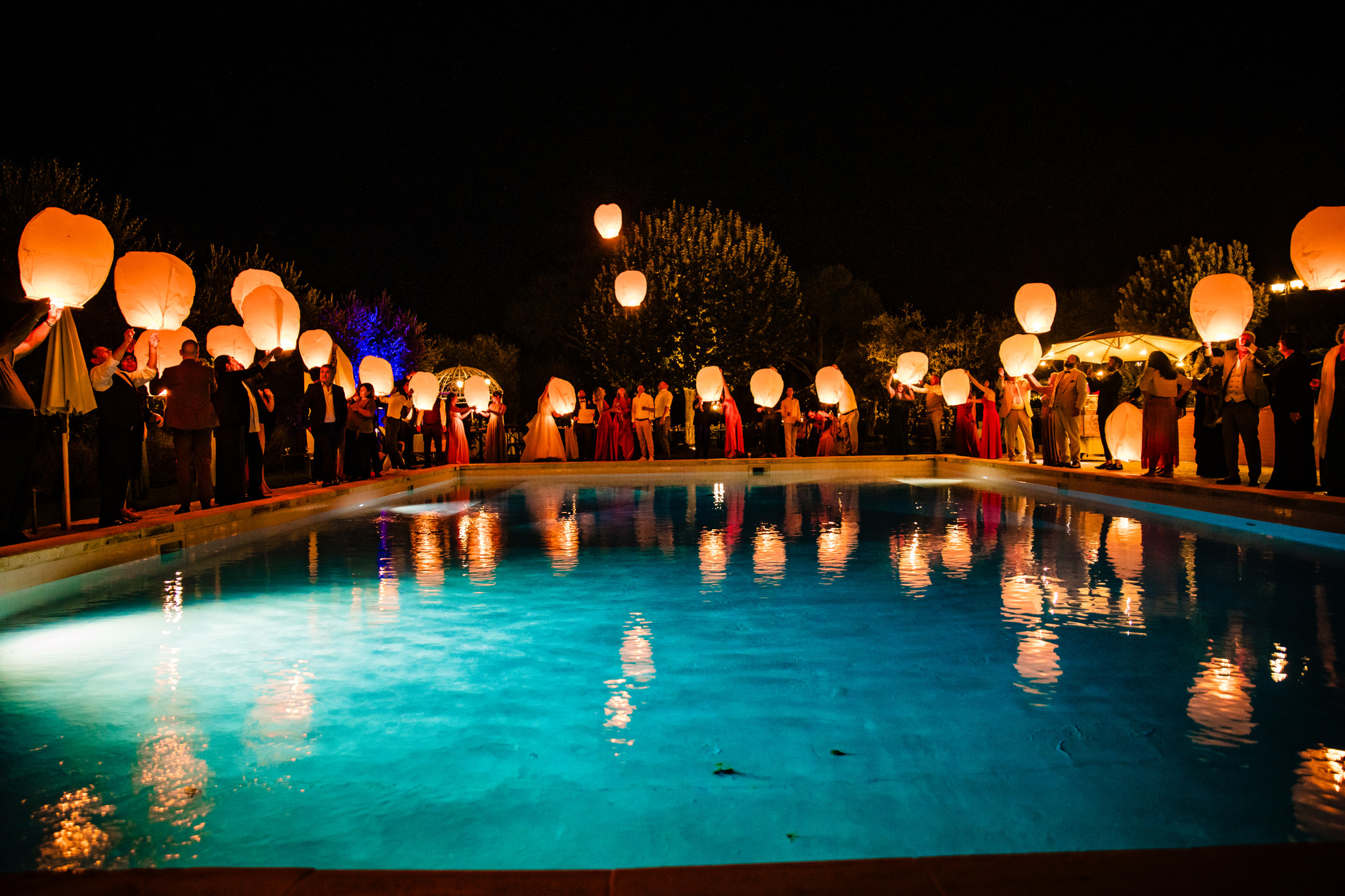
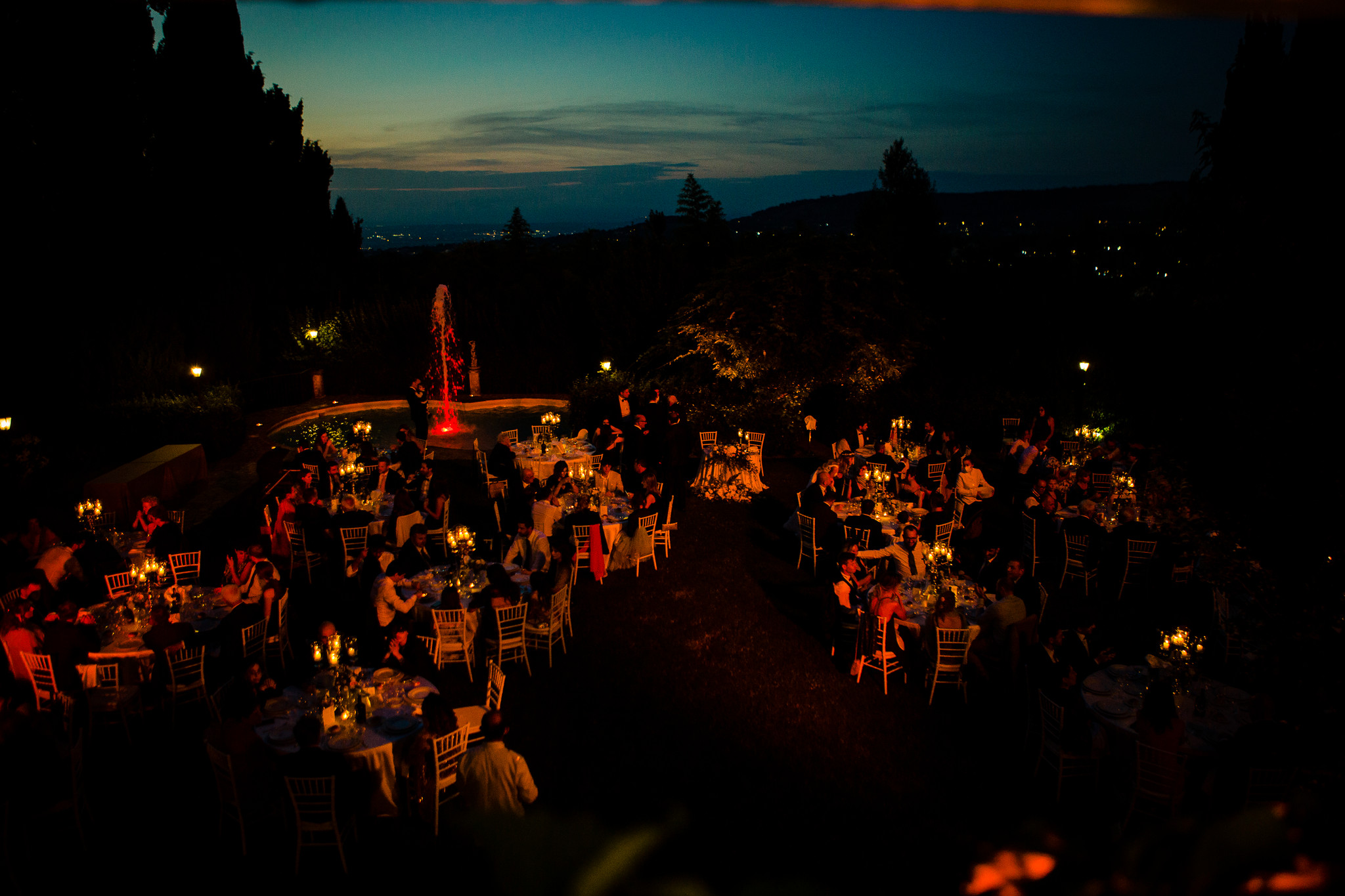
Lighting is one of the most underestimated wedding costs.
Many couples assume the venue will already provide everything needed for dinner, speeches, dancing and atmosphere.
That is not always the case.
Depending on the venue, you may need additional lighting for:
pathways and guest movement;
architectural highlights;
Lighting can include string lights, chandeliers, uplighting, spotlights, dance floor lights, technical support, installation and dismantling.
Even a simple lighting setup can add a meaningful amount to the budget, while more refined production can become a significant design investment.
Before booking a venue, ask exactly what lighting is included and what must be rented separately.
3. Printed Details and Paper Goods
Menus, place cards, seating charts and welcome signs can seem like small details.
But they can add up quickly, especially when they are custom-designed or produced with premium materials.
Paper goods may include:
weekend itineraries;
custom illustrations or venue maps.
The final cost depends on design, printing method, quantity, paper quality, calligraphy, frames, ribbons, wax seals and installation.
If you want a refined and cohesive visual identity, include stationery and signage in the budget from the beginning.
4. Guest Comfort Items
Destination weddings in Italy often happen outdoors, especially in spring, summer and early autumn.
Guest comfort items can be very useful, but they are often forgotten during early budgeting.
fans for hot weather;
parasols for sun exposure;
umbrellas in case of rain;
blankets or shawls for cooler evenings;
heel protectors for grass or gravel;
custom favors or local gifts.
These details can improve the guest experience, but they should be chosen intentionally.
Not every wedding needs all of them.
The right choices depend on the season, venue, weather risk and guest profile.
5. Ceremony Chairs and Additional Rentals
Some couples assume ceremony chairs are included with the venue.
Sometimes they are not.
At many Italian venues, especially private villas and countryside estates, chairs, tables, linens, tableware and other rental items may be provided by the caterer or a rental company.
Additional rental costs may include:
dance floor structures;
delivery, setup and collection fees.
These costs can vary significantly depending on quantity, quality, location and supplier access.
Always ask what is included in the venue fee and what must be brought in separately.
6. Overtime and Party Extension Fees
Wedding timelines in Italy are often subject to venue rules and local noise restrictions.
If you want the party to continue later than the standard end time, there may be overtime fees.
lighting and technical staff;
transportation companies;
wedding coordination team.
Do not assume that extending the party is simply a matter of asking the DJ to play longer.
Every supplier involved in the extended timeline may need to be paid accordingly.
Confirm the end time, extension options and hourly fees before signing contracts.
Vendor meals are another cost couples often forget.
Suppliers who work through the day usually need to be fed, especially if they are present during dinner hours.
wedding planners and coordinators;
drivers or support staff, depending on timing.
Vendor meals are usually simpler than guest meals and may be charged at a reduced rate, but they still need to be included in the catering budget.
Short-time suppliers, such as hair and makeup artists, may not always require a meal unless they stay for touch-ups or remain on-site for many hours.
Your planner can help calculate how many vendor meals are needed.
8. Venue Security Deposits
Some wedding venues in Italy require a refundable security deposit.
This is usually held as protection against damages, extra cleaning, missing items or contract breaches.
The amount varies by venue and property type.
It may be requested:
by credit card hold or bank transfer;
as part of the venue contract.
Even if it is refundable, it affects cash flow.
Confirm the amount, timing, refund conditions and payment method in advance.
9. Transport After the Party
Guest transportation is one of the most important hidden costs for destination weddings in Italy.
This is especially true for countryside venues, villas, castles or estates located outside town centers.
At the end of the night, guests may not be able to rely on taxis or ride-sharing apps.
Transport may be needed for:
arrival at the ceremony;
transfers between ceremony and reception;
late-night return to hotels;
guests staying in different towns or properties.
This is not only a comfort issue.
It is a safety and logistics issue.
If guests are drinking and the venue is remote, proper transportation should be treated as essential.
10. Rain Plan and Weather Backup Costs
Many Italian weddings are designed around outdoor spaces.
But a beautiful Plan B can carry additional costs.
Depending on the venue and season, a weather backup may require:
additional setup labor;
furniture relocation;
last-minute logistics changes;
supplier overtime for revised setup.
Some venues have an included indoor backup space.
Others require a rented structure.
The difference can have a major impact on the budget.
Before booking, ask whether the rain plan is included, beautiful and realistic for your guest count.
11. VAT and Service Charges
VAT is another cost that international couples can underestimate.
Some quotes in Italy are shown including VAT, while others are shown excluding VAT.
This can make comparisons confusing.
As a general reference:
some food, beverage, venue and accommodation items may apply 10% VAT;
many professional services may apply 22% VAT;
some suppliers may operate under different tax regimes.
Always ask whether VAT is included in every quote.
If not, ask what percentage applies and whether it will appear in the final contract.
12. Setup, Delivery and Dismantling Fees
Rentals, florals, lighting and technical equipment often involve more than the cost of the items themselves.
Additional fees may apply for:
late-night collection;
difficult venue access;
stairs, gravel roads or limited parking;
early morning or next-day removal.
These fees are normal, but they should be visible in the budget.
A low item price can become much higher once transport and labor are included.
How Much Buffer Should You Keep?
For a destination wedding in Italy, it is wise to keep a contingency buffer.
A practical range is usually 10% to 20% of the total wedding budget.
This buffer protects you from unexpected costs, last-minute changes, exchange rate fluctuations, guest count changes and forgotten details.
The goal is not to create fear.
The goal is to create control.
When you plan for hidden costs early, they stop being hidden.
Frequently Asked Questions
What are the most common hidden wedding costs in Italy?
The most common hidden costs include SIAE music license, lighting, vendor meals, guest transport, VAT, rentals, paper goods, party overtime, weather backup and setup or delivery fees.
Do we need to pay SIAE for a wedding in Italy?
Usually yes, if music is played at the event. The cost depends on the type of music, guest count, dancing and number of events.
Are ceremony chairs usually included at Italian wedding venues?
Sometimes yes, sometimes no. At many venues, chairs may be provided by the caterer or rental company rather than the venue. Always confirm what is included.
Do wedding vendors in Italy need meals?
Vendors who work through the day and remain on-site during meal times usually require meals. These are often charged at a reduced vendor rate by the caterer.
How much extra budget should we keep for unexpected wedding costs?
A 10% to 20% contingency buffer is a sensible range for a destination wedding in Italy, depending on the complexity of the event and the number of suppliers involved.
Budgeting for a wedding in Italy becomes much easier when the details are visible from the beginning.
Hidden costs are usually not dramatic when they are planned for early.
They become stressful only when they appear too late.
A clear wedding budget should include not only the beautiful elements, but also the practical ones: lighting, transport, licenses, meals, rentals, staff and backup plans.
That is what allows the celebration to feel seamless.
The more honest the budget, the more peaceful the planning journey.
Planning Your Wedding in Italy with Budget Clarity?
Dolce Promessa helps international couples create refined destination weddings across Tuscany, Lake Como, the Amalfi Coast, Rome and private Italian estates — with budget clarity, hidden cost planning, trusted vendors, design direction, venue guidance and guest logistics.
Begin your wedding journey with us.
With care, Sofia Lead Planner & Experience Designer Dolce Promessa