ITALY TRAVEL GUEST EXPERIENCE
How to Get Legally Married in Italy as a U.S. Citizen
How to Get Legally Married in Italy as a U.S. Citizen — Getting married in Italy as Americans? Here’s a complete guide to the documents U.S. couples need...
How to Get Legally Married in Italy as a U.S. Citizen
Required Documents, Civil Ceremony Process and Practical Guidance for American Couples
Dreaming of getting legally married in a Tuscan villa, on the Amalfi Coast, in Rome or in a historic Italian town hall?
Italy is one of the most romantic places in the world for a destination wedding. But if you are a U.S. citizen and want your marriage to be legally recognized, there are specific documents and administrative steps to follow.
The process is absolutely possible, but it requires planning, timing and careful coordination between the couple, the U.S. Consulate or Embassy, the Italian authorities and the local Comune where the wedding will take place.
This guide explains the general process for American couples who want to get legally married in Italy.
Please note: requirements can vary depending on the Comune, region, personal circumstances and type of ceremony. Always confirm the latest requirements with the relevant authorities before making final decisions. The U.S. Embassy in Italy provides official guidance for U.S. citizens getting married in Italy. (https://it.usembassy.gov/getting-married-in-italy/?utm_source=chatgpt.com)
Can U.S. Citizens Legally Marry in Italy?
Yes. U.S. citizens can legally marry in Italy, provided they complete the required paperwork and meet the requirements of the local Italian authorities.
A civil wedding in Italy can be legally binding and recognized internationally when performed according to Italian law.
Catholic weddings may also be legally binding in some cases, but they require additional religious documentation and coordination with the Church and civil authorities.
Symbolic ceremonies, on the other hand, are not legally binding unless the legal marriage is completed separately.
Documents Usually Required for a Legal Wedding in Italy
The exact documents may vary depending on the Comune and your personal circumstances, but American couples should usually expect to prepare the following.
Valid U.S. Passports
Both partners will need valid U.S. passports to prove identity and citizenship.
Your passport should be valid for travel and should match the names used in your official marriage documentation.
Some Italian authorities may request long-form birth certificates showing parental names.
Depending on the Comune, these may need to be translated into Italian and apostilled.
Because requirements can vary, this should be confirmed directly with the local marriage office before the process begins.
The Atto Notorio is a sworn declaration confirming that there are no legal impediments to the marriage.
U.S. citizens may obtain it through the competent Italian Consulate before traveling, or in some cases in Italy through the appropriate Italian authority.
Timing and appointment availability can vary, so this should be planned well in advance.
Dichiarazione Giurata / Nulla Osta
Once in Italy, U.S. citizens usually need to make a sworn declaration before a U.S. consular officer stating that they are legally free to marry.
This document is commonly referred to as the Nulla Osta or affidavit of eligibility to marry.
After it is issued, it generally needs to be legalized by the competent Italian Prefettura before being presented to the Comune.
The U.S. Embassy and Consulates in Italy provide guidance on the process and relevant consular districts. (https://it.usembassy.gov/getting-married-in-italy/?utm_source=chatgpt.com)
Declaration of Intention to Marry
Before the wedding, the couple usually meets with the Civil Registrar at the local Comune to sign a Declaration of Intention to Marry.
This appointment normally requires:
the legalized Nulla Osta;
any required translations or apostilled documents;
an interpreter, if the couple does not speak Italian;
any additional documents requested by the local Comune.
The timing of this appointment can vary, so it should be coordinated carefully before travel dates are finalized.
Civil, Catholic and Symbolic Ceremonies in Italy
A civil ceremony in Italy is legally binding when performed by the Mayor, a civil registrar or an official delegate of the Comune.
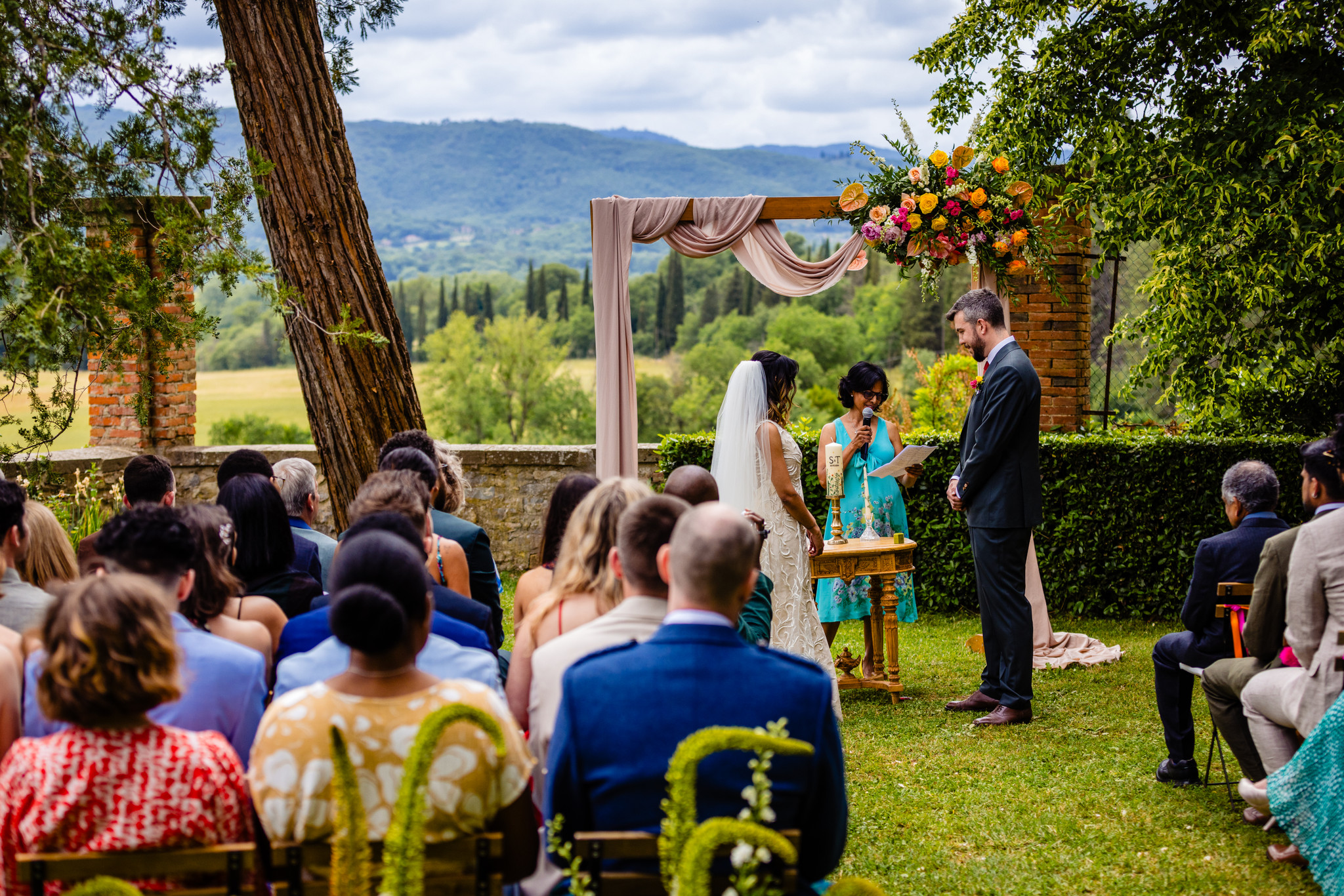
Civil weddings may take place at the town hall or in approved venues authorized by the municipality.
Not every villa or private estate is approved for legal civil ceremonies, so this must be confirmed before choosing the venue.
Catholic Religious Ceremonies
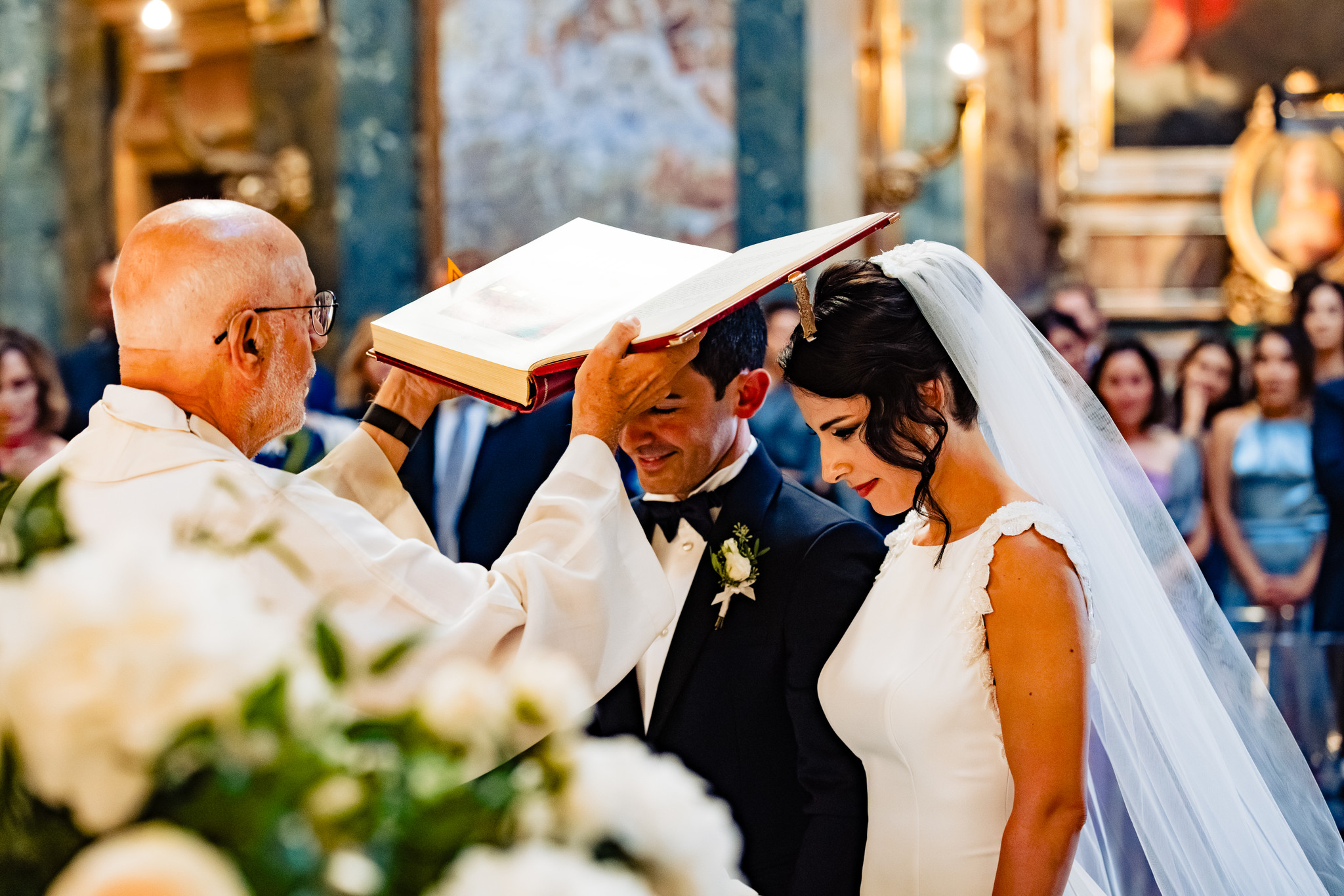
Catholic weddings in Italy may be legally binding when the required civil and religious procedures are completed correctly.
This usually involves both civil paperwork and Church documentation from the couple’s home parish, coordinated with the local Italian church or diocese.
Catholic wedding requirements should be started well in advance, as religious documentation can take time.
A symbolic ceremony has no legal value by itself.
Many couples choose to complete the legal marriage separately and then have a symbolic ceremony in Italy that reflects their style, story and emotional vision.
This can be a simpler option for couples who want more flexibility with venue, wording, timing and ceremony structure.
Suggested Timeline for U.S. Couples
The timeline can vary depending on appointment availability, region and documentation requirements.
As a general guide, couples should begin the legal wedding process several months before the wedding date.
These timings are only a planning reference. The official schedule should always be confirmed with the relevant Comune, consular office and planner.
Do You Need a Wedding Planner for a Legal Wedding in Italy?
For most U.S. couples, working with a local wedding planner is strongly recommended.
Italian bureaucracy can be complex, and procedures may differ depending on the region, Comune and personal circumstances.
A planner can help coordinate:
communication with the Comune;
document checklists;
translations and apostilles;
interpreter requirements;
venue ceremony permissions;
coordination between legal ceremony and wedding celebration;
timelines for travel and paperwork.
This support is especially useful when the couple is planning from the United States and cannot manage every local appointment directly.
Common Mistakes to Avoid
When planning a legal wedding in Italy, avoid these common mistakes:
assuming every villa is authorized for civil ceremonies;
waiting too long to start the paperwork;
booking travel dates before confirming appointment timing;
assuming U.S. paperwork is automatically valid in Italy without legalization;
forgetting that some documents may need translation and apostille;
not checking whether an interpreter is required;
confusing symbolic ceremonies with legally binding ceremonies.
Legal weddings are manageable, but they require precision.
Frequently Asked Questions
Can two U.S. citizens legally marry in Italy?
Yes. Two U.S. citizens can legally marry in Italy if they complete the required documents and follow the process required by the Italian authorities.
Will our Italian marriage be recognized in the United States?
In general, marriages legally performed abroad are usually recognized in the United States, but couples should confirm any state-specific requirements with the appropriate U.S. authority. The U.S. Department of State provides general information on marriages abroad. (https://travel.state.gov/en/international-travel/living-abroad/marriage.html?utm_source=chatgpt.com)
Do we need to be in Italy before the wedding?
Usually yes. Couples generally need to be in Italy before the ceremony to complete consular and municipal steps. The exact number of days depends on the Comune, appointments and required documents.
Can we have a legal wedding in a villa?
Only if the villa or venue is approved by the local municipality for civil ceremonies. Otherwise, the legal ceremony may need to take place at the town hall, with a symbolic celebration at the villa.
Is a symbolic ceremony easier than a legal ceremony?
Yes. A symbolic ceremony is usually simpler because it does not require Italian legal paperwork. Many couples complete the legal marriage at home and celebrate symbolically in Italy.
Getting legally married in Italy as a U.S. citizen is absolutely possible.
It simply requires organization, correct documents and enough time.
With the right guidance, the paperwork can be managed calmly, allowing you to focus on what truly matters: celebrating your marriage in one of the most beautiful countries in the world.
Just make sure your documents arrive before the romance does.
Planning Your Legal Wedding in Italy from the U.S.?
Dolce Promessa helps American and international couples create refined destination weddings across Tuscany, Lake Como, the Amalfi Coast, Rome and private Italian estates — with legal wedding guidance, budget clarity, trusted vendors, design direction and guest logistics.
Begin your wedding journey with us.
With care, Sofia Lead Planner & Experience Designer Dolce Promessa