DESTINATION KNOWLEDGE
Planning a Wedding in Tuscany: Logistics & Expert Tips
Planning a Wedding in Tuscany: Logistics & Expert Tips — Learn behind-the-scenes logistics and expert advice to make your special day truly unforgettable.
Wedding Planning Guide
Planning a Wedding in Tuscany
The Hidden Logistics Your Pinterest Board Does Not Tell You
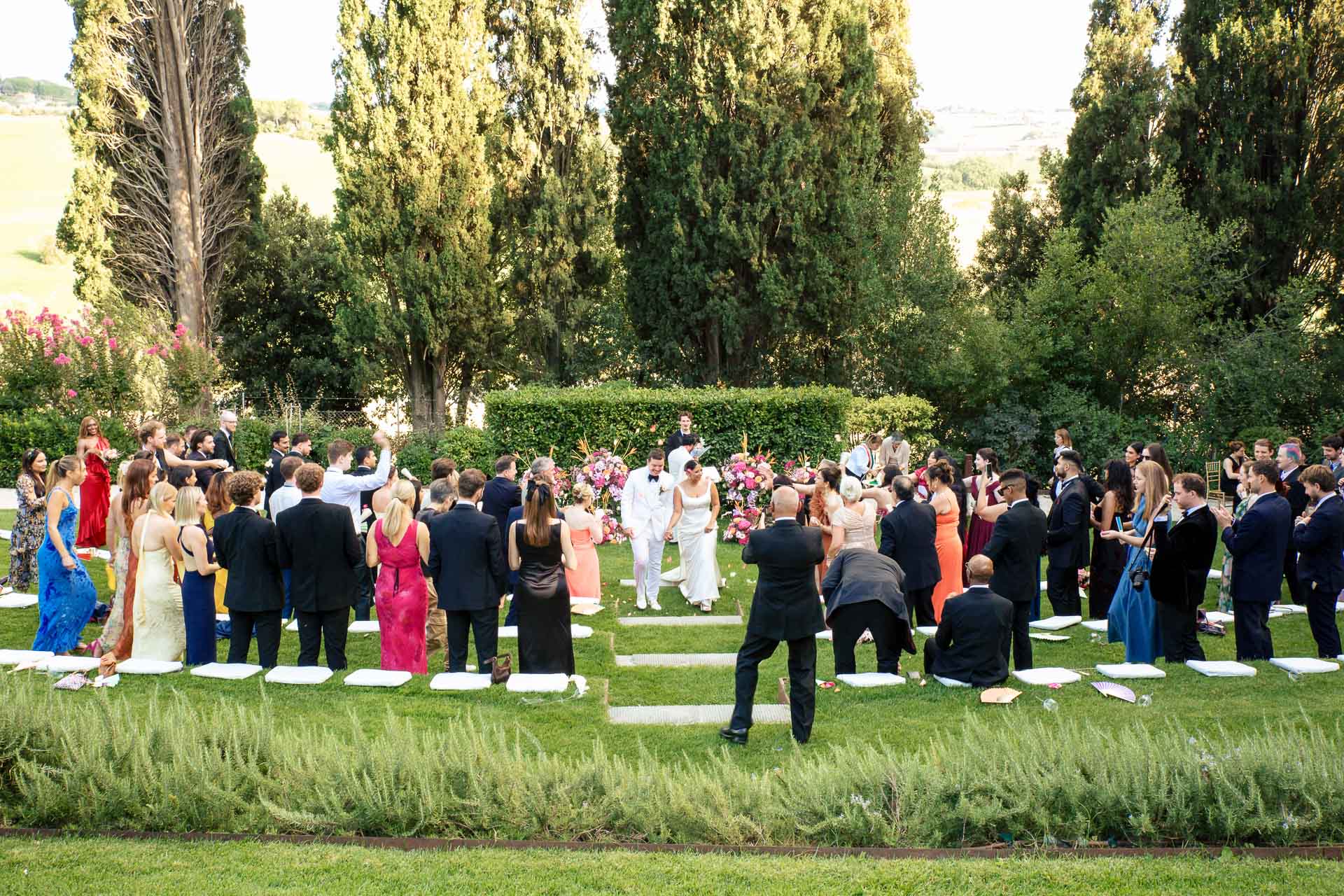
We have all seen the images: a long imperial table stretching through a cypress-lined avenue, golden hour light touching the crystal glasses, olive trees in the background and a vintage car waiting in the distance.
It looks effortless.
It looks like a dream.
But planning a wedding in Tuscany requires more than beauty. Behind every seamless destination wedding there is a detailed logistical structure that most couples never see.
Tuscany is one of the most romantic wedding destinations in Italy, but it is also rural, historic and sometimes unpredictable. The roads are narrow. The venues are often remote. The weather can change. Suppliers need access. Guests need guidance. Timelines need space.
This is what your Pinterest board does not tell you.
1. The Google Maps Trap
Many international guests love the idea of renting cars and turning a wedding in Tuscany into a full Italian vacation.
That can work beautifully, but only if the travel logistics are handled with care.
In the winding backroads of Val d’Orcia, Chianti and the Tuscan countryside, road closures, gravel roads, restricted access and last-minute maintenance can create unexpected delays.
Navigation apps are useful, but they are not perfect. Some routes may send guests through roads that are technically possible but completely unsuitable for wedding-day timing, formal clothing or unfamiliar drivers.
For a wedding day, the route should not be guessed.
It should be checked, shared clearly and supported by proper timing.
2. The 50-Seat Coach Fantasy
A common assumption is simple: if there are 100 guests, book two large buses.
In Tuscany, that is not always realistic.
Many historic towns, countryside estates and villa entrances were not designed for large modern coaches. Narrow roads, tight turns, gravel access and limited turning space can make a 50-seat bus impractical or even impossible.
In many cases, smaller shuttles are a better solution.
They are more agile, safer on rural roads and more likely to bring guests close to the actual venue entrance instead of leaving them far away from the celebration.
In destination weddings, movement is part of the guest experience.
Transport should feel calm, not chaotic.
3. The Hostess Factor
A driver’s job is to drive.
It is not to act as a concierge, guest manager or wedding-day coordinator.
Drivers may count passengers, but they do not always know who is missing, who is delayed, who is still in their room or who accidentally got into the wrong shuttle.
This is why guest transportation for a wedding in Tuscany often needs more than vehicles.
It needs coordination.
A hostess or transport coordinator can check names, manage timing, call delayed guests, communicate with the planning team and make sure no important person is left behind.
For international weddings, especially with multiple hotels or countryside accommodation, this detail can protect the entire timeline.
4. The Rain Plan Should Not Be an Afterthought
A beautiful outdoor wedding in Tuscany is unforgettable.
But every outdoor wedding needs a serious Plan B.
The question is not only whether the venue has indoor space. The question is whether that indoor space can truly support the full guest count, the dinner layout, the ceremony, the music, the catering flow and the overall guest experience.
In some venues, a marquee or tent may be required. In others, a trusted catering or production partner may be able to provide a last-minute structure if the weather forecast changes.
The key is not panic.
The key is preparation.
A strong planner helps you avoid wasting money on unnecessary solutions while still making sure a professional alternative exists if the weather changes.
5. Scale and Soul: The 15 vs. 150 Rule
The mood of a wedding can remain intimate and elegant at any size, but the architecture changes completely.
The priority is intimacy. You do not want guests to feel lost in a space designed for a much larger event.
Smaller weddings need proportion, warmth and a layout that makes every guest feel part of the moment.
The priority is flow.
A large wedding needs space for movement, service, music, transport, aperitivo, dinner and after-party transitions.
The venue must not feel overcrowded, but it also must not feel empty.
Luxury is not only how the wedding looks. Luxury is how easily guests move through the experience.
6. Why Vendor Timing Matters
Wedding-day problems rarely announce themselves politely.
A musician may go to the wrong church. A celebrant may take the wrong road. A cake delivery may be delayed. A shuttle may miss a turn. A technical team may need more setup time than expected.
This is why professional timelines always include buffers.
Asking vendors to arrive early is not excessive. It is protection.
A 30- to 45-minute buffer can be the difference between a visible problem and a situation solved quietly before guests notice anything.
Good planning is not only about choosing beautiful flowers or an elegant venue.
Good planning is about anticipating the small operational risks that can affect the entire wedding weekend.
7. Why Tuscany Needs Local Planning Experience
Planning a wedding in Tuscany from abroad requires more than selecting suppliers online.
Couples need someone who understands local geography, timing, venue access, transport limitations, weather patterns, supplier behavior, catering logistics and the expectations of international guests.
A Tuscan wedding should feel relaxed and beautiful for the couple.
But behind that relaxed atmosphere, the planning team must be precise.
The goal is simple: your guests experience the Chianti, the sunset, the dinner, the music and the emotion.
They should never experience the stress behind the scenes.
Frequently Asked Questions
Is Tuscany difficult for wedding transportation?
It can be. Many Tuscan venues are located in rural areas with narrow roads, gravel access or limited turning space. Smaller shuttles and clear guest coordination are often more effective than large coaches.
Do guests need rental cars for a wedding in Tuscany?
Rental cars can be useful before and after the wedding, but for the wedding day itself, organized transportation is usually safer and more reliable, especially when guests are unfamiliar with the area.
Do Tuscan wedding venues always have a rain plan?
Not always. Some venues have suitable indoor spaces, while others may require a marquee, tent or alternative layout. The rain plan should be reviewed before signing the venue contract.
Can large buses reach villas in Tuscany?
Sometimes, but not always. Many countryside venues are not suitable for 50-seat coaches. Smaller shuttles are often a better logistical solution.
Final Thought: Tuscany Is Beautiful, But It Needs Structure
Planning a wedding in Tuscany should be about the landscape, the food, the music, the people and the memory of being together in one of the most beautiful regions in Italy.
It should not be about bus dimensions, lost guests, difficult roads, missing vendors or a rain plan discovered too late.
That is why logistics matter.
When the structure is strong, the experience feels effortless.
Planning Your Wedding in Italy from Abroad?
Dolce Promessa helps international couples create refined destination weddings across Tuscany, Lake Como, the Amalfi Coast, Rome and private Italian estates — with budget clarity, trusted vendors, design direction and guest logistics.
Begin your wedding journey with us.
With care, Sofia Lead Planner & Experience Designer Dolce Promessa